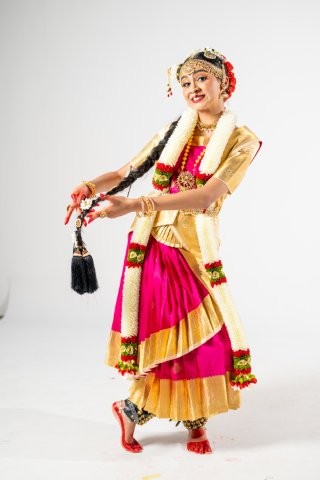

At four years old, Mahi Ramnarain asked her mother if she could learn what she called the “foot-thumping dance”. Years later, when the Reddam House Ballito student stepped on stage for her Bharatanatyam debut, she carried with her the dream of a grandmother she had never met.
Mahi, now 15 and in Grade 9, completed her Arangetram at The Capital Hotel, Zimbali, on 25 April 2026. Accompanied by live musicians, her three-and-a-half-hour recital marked the culmination of years of training in the Indian classical dance form, combining intricate footwork and rhythm with expressive storytelling.
For Mahi, who was 14 at the time, the occasion was also an opportunity to honour her late maternal grandmother, whom she calls her Nani. “My mum told me that my Nani always wanted to be a dancer, but she was never given the opportunity to pursue that dream,” she says. “I hoped that through my Arangetram I could honour her memory and, in some small way, fulfil her wish.”
The performance held particular significance for her teacher, Shrimathi Sundharie Ramesh, too. Mahi became her 33rd and final Bharatanatyam graduate as she retired from active teaching after 36 years at the Kumari Sundharie Dance Institute.
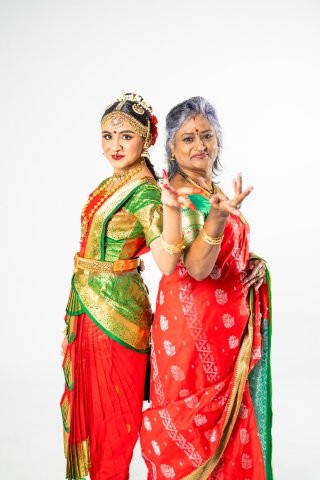
Writing in the programme for Mahi’s Arangetram, Ramesh reflected on the bond they had formed through years of training: “From her very first steps to this significant milestone, I have watched Kumari Mahi Ramnarain grow not only as a dancer but as a graceful and compassionate young woman.”
Mahi began formal Bharatanatyam training at nine, having explored other Indian classical dance forms. Under Ramesh’s guidance, she learnt the technique, expression and musicality needed to perform, alongside the meaning behind the stories she was telling.
Her preparation suffered a serious setback two months before the recital, when a knee injury left her on crutches and unable to practise for six weeks. When she was able to dance again, she had only about a fortnight before the performance. “It was stressful knowing that I couldn’t practise while the Arangetram was getting closer, and there were times when I felt overwhelmed by the situation,” she says. “However, I remained determined and focused on what I wanted to achieve.”
Returning to rehearsals while keeping up with Grade 9 schoolwork required careful time management and many late nights. Mahi credits her guru, family and accompanying musicians with helping her through that period, while her teachers at Reddam House Ballito were understanding and accommodated her circumstances, helping her balance her academic responsibilities with preparation for the performance.
Catherine Raw of Reddam House Ballito says: “Our belief that ‘people are our priority’ means taking the time to understand what matters to each student and how we can support them. A young person’s creative, artistic, sporting and cultural pursuits are an important part of their education. These experiences help them develop confidence, judgement and perseverance as they grow into well-rounded adults with interests and ambitions of their own.
“For Mahi, dance is also a deeply personal connection to her family and heritage. Recognising the importance of that commitment, and supporting her as she balanced it with schoolwork through a difficult period, is part of our role as educators. We are very proud of what she has achieved.”
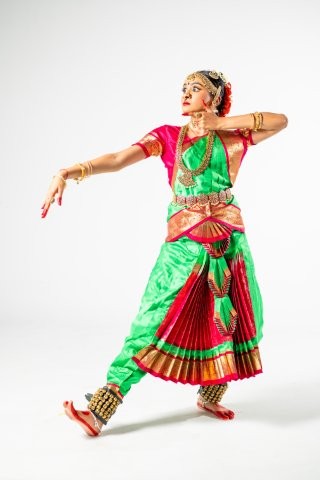
On the day, Mahi performed a programme ranging from devotional pieces to technically demanding sequences, with five costume changes. Ramesh presented her with a certificate from the institute recognising the successful completion of her Arangetram.
For Mahi, the connection to her heritage has deepened throughout her training. Learning the stories of Hindu gods and goddesses, and expressing them through movement and music, has given her a more personal understanding of the traditions passed down through generations. “I have come to understand that every movement and expression has meaning, and that I am not simply performing a dance but becoming part of a tradition that has been carried forward for generations,” she says. She hopes one day to perform in India as part of a South African group of dancers and musicians, and to share her knowledge with other students. “Although I have reached the completion of my formal training, I don’t believe that learning ever really ends. Bharatanatyam is such a deep art form that there will always be opportunities to grow, explore and deepen my understanding of the art.